Yesterday, a the blog piece The River Sid @ Sidmouth Nature appeared – looking at what the rich online resource Sidmouth Nature has to say about the Sid – and as the piece shows, that’s quite a lot.
The website also has a lot on the hidden gem known as Glen Goyle. Here’s the introduction, reproduced here with the permission of the website’s creator and curator Peter Orchard:
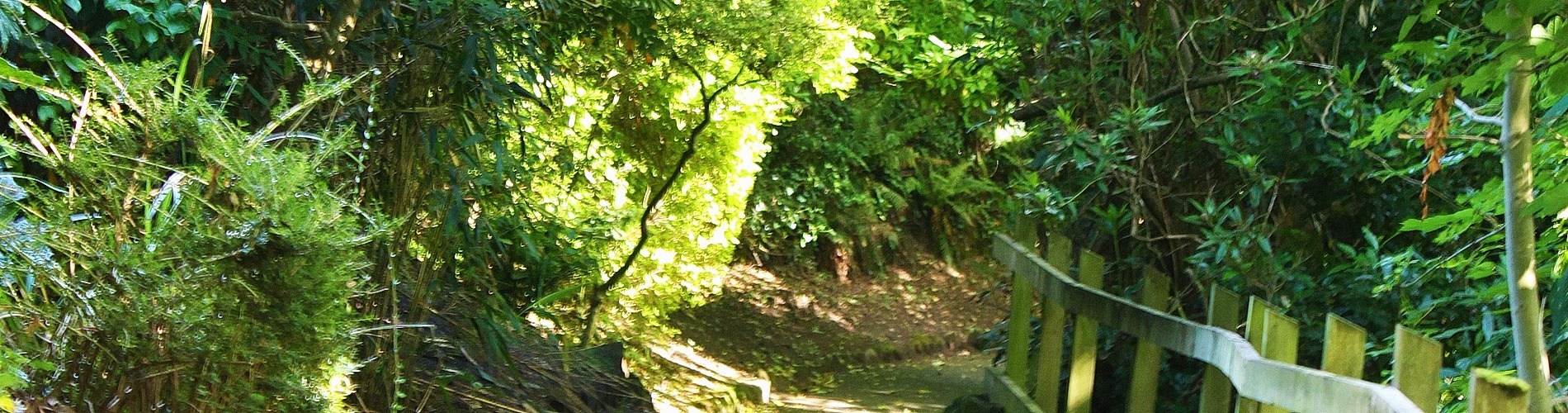
Have you ever wondered what natural secrets lie just out of sight in a familiar seaside town? In Sidmouth, a popular and well-explored destination, there are still hidden gems waiting to be discovered. One such place is Glen Goyle, a secretive, steep-sided valley that many visitors—and even some locals—might overlook. Through this sheltered hollow, a stream known as the Bickwell Brook has patiently etched its way through ancient rock, nurturing a sliver of wilderness between the town and the sea. Join us on a journey into this quiet corner of the town.
Very inviting!
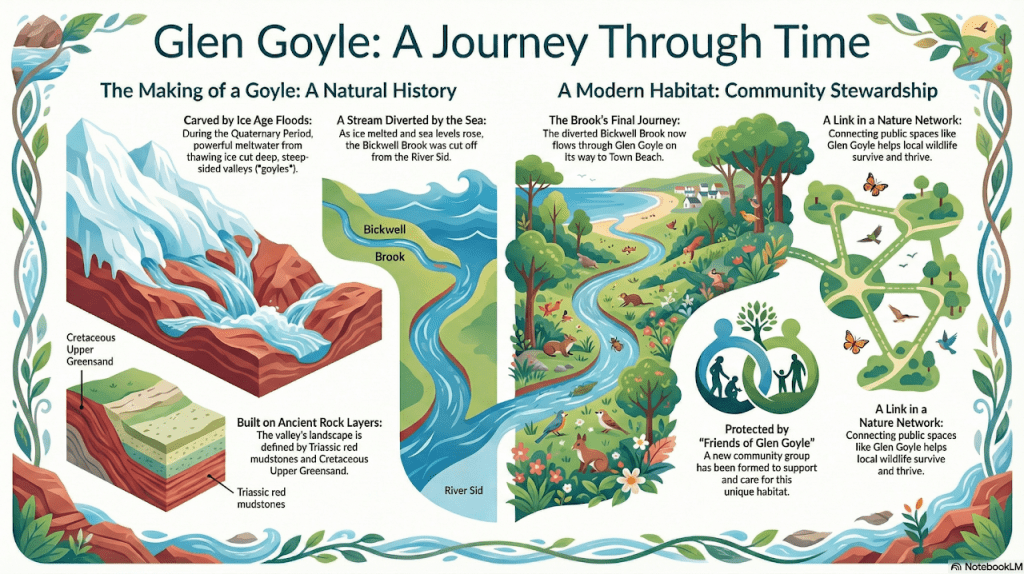
On the same page we have sections on the Glen’s natural habitat, its wealth of plants and animals – and ‘an invitation to explore’. There is also a splendid pictogram which tells the story of the Glen – together with a very generous reference to the Friends of Glen Goyle:
There are other pages on the website which refer to the Glen.
Sidmouth Nature is not only a resource, with information expertly put together; it’s also a stimulus to engage with the nature in our midst. Several pages suggest “Practical Outdoor Activities for Ecological Understanding” – and on the page Around the town visiting, two activities are suggested which make good use of what the Glen has to offer:
Monitor and Map Invasive Species
The sources highlight the challenge of invasive non-native species. Visit West Hill to see the rampant Alexanders, noting its abundance on the slopes. Then, observe areas like Glen Goyle or Fortfield to map the presence of the troublesome Three Cornered Leek or the dominant Winter Heliotrope. This activity helps visualise the scale of management challenges presented by specific flora.
Source Principles: Challenges of invasive species overwhelming native ecosystems.
Relevant Sites: West Hill, Glen Goyle, Fortfield (within Parks and Gardens).
Compare Biodiversity in Highly Managed vs. Restored Sites
Visit Connaught Gardens and note its high degree of maintenance and landscaped ‘outdoor rooms’. Compare the number of species recorded here (72) with the diversity recorded in the historically neglected but now restored Glen Goyle (over 100 species recorded). Observe how volunteer efforts (like those by FOGG in Glen Goyle) focus on clearing invasives and replanting native flora.
Source Principles: Tension between recreational use and ecological value; influence of maintenance intensity on diversity.
Relevant Sites: Connaught Gardens, Glen Goyle.
This last observation is very pertinent to the purpose of the Glen – and how it should be looked after. It is a ‘garden’ in many ways – but it is also listed as one of the Wild Places in Sidmouth.
Finally, in the page devoted to Sidmouth Cemetery, reference is made to the FOGG project as a way to balance the managed and the wild – by bringing the community along:
The Vision Group for Sidmouth is proposing an inspiring way forward: the creation of a “Cherishing Sidmouth Cemeteries” friends group. This initiative would bring together volunteers to work in partnership with the council, helping to care for the grounds, document its rich heritage, and ensure its biodiversity is protected.
We already have a powerful local example of how this can work. The Friends of Glen Goyle, also set up by the Vision Group, have successfully partnered with the council to transform another beloved space. By following this model, we can ensure this unique sanctuary is cherished by everyone—a place where the stories of our past can nurture the wildlife of tomorrow.
Thank you Peter and Sidmouth Nature for such a generous portrayal – and for such a rich look at this charming corner of our Valley.